Tropical ECOLOGY
& Entomology LAB
Asian School of the Environment
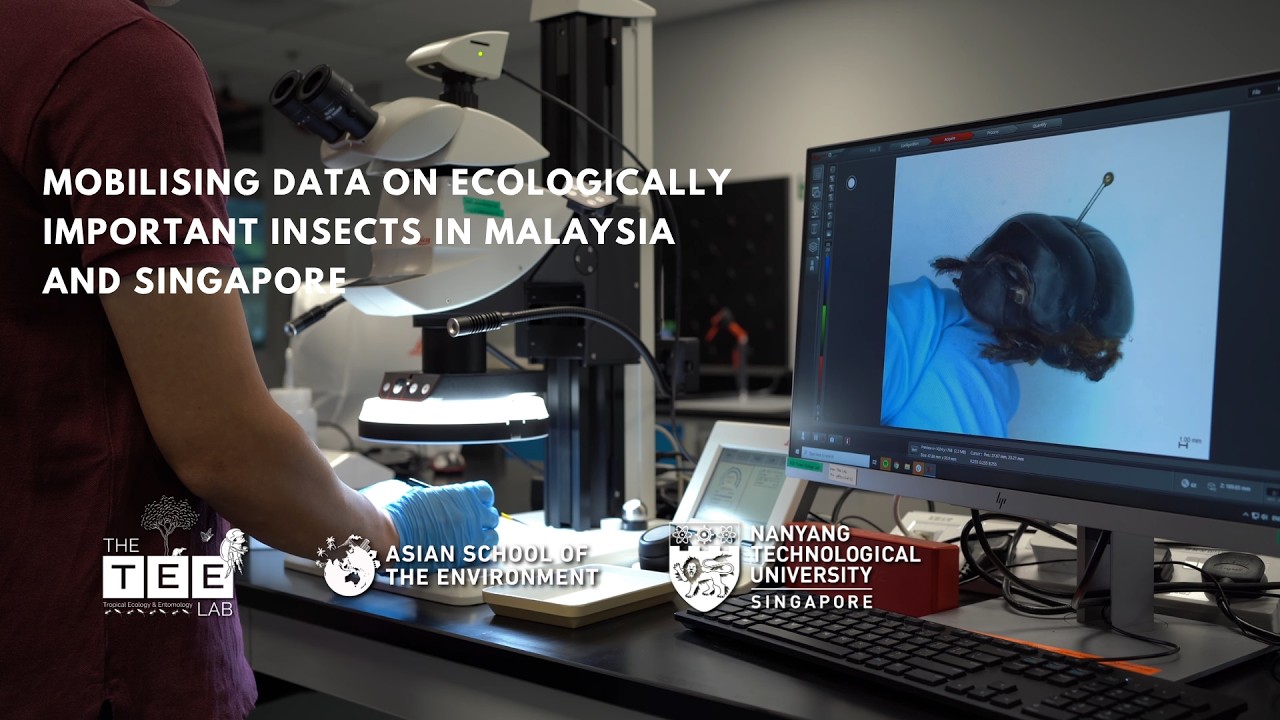
Background image credit: Chien C. Lee
FEATURED
Using Metabarcoding Techniques to Map Multiple Dung Beetle-Vertebrate
iDNA Networks in a SEA Forest
Research paper by Ong et al., (2026) published in Molecular Ecology Resources.
In this study, we present an optimised DNA metabarcoding protocol to construct quantitative dung beetle-vertebrate trophic networks using dung beetles are sources of vertebrate DNA. Our optimised molecular techniques contribute towards the development of new methods for comprehensive biodiversity assessments and ecological network studies that are urgently needed to monitor biodiversity in the hyper-diverse tropics.
Read the paper: https://onlinelibrary.wiley.com/doi/10.1111/1755-0998.70151


ABOUT US
The Tropical Ecology and Entomology (TEE) Lab is based in the Asian School of the Environment (ASE) at Nanyang Technological University (NTU) in Singapore. Our research explores how biodiversity responds to environmental change and how these changes influence species interactions and ecosystem functioning across tropical landscapes.
Our research has a special focus on invertebrates, which play vital yet often overlooked roles in ecosystems, and emphasises the importance of taxonomy and natural history as foundations for understanding biodiversity responses to environmental change and guiding conservation efforts.
The TEE Lab takes an applied and interdisciplinary approach, investigating how habitat fragmentation, urbanisation, and landscape connectivity influence where species live, how they move, and how ecosystems adapt. We also explore how emerging technologies, such as environmental DNA (eDNA) and AI-powered automated monitoring systems can transform the way we study and protect biodiversity in the hyperdiverse tropics.
We collaborate with partners in government, conservation, and industry to provide evidence-based science to inform policy and sustainable management decisions. We’re also passionate about public engagement, helping people appreciate the incredible diversity of life around them, and especially the fascinating world of insects.

RESEARCH AREAS